Iran war vote, Armenia's election, North Korea's nuclear push, and Myanmar's rebranding
Today's four biggest political stories: the U.S. House voted 215–208 to stop Trump's Iran war (next stop: the Senate), Armenia heads to a pivotal election this Saturday that Russia is openly trying to influence, Kim Jong Un showed off a new uranium enrichment site and promised to go exponentially bigger, and Myanmar's coup leader renamed himself president after stage-managed elections.

Global Politics Today — June 4, 2026
Four major stories worth knowing today: the U.S. Congress pushes back on Trump's Iran war, Armenia holds a pivotal election this weekend, North Korea shows off a new nuclear site, and Myanmar's military hands itself a presidential title.
Story 1: The U.S. House just voted to stop Trump's Iran war — but it's not over yet
What happened
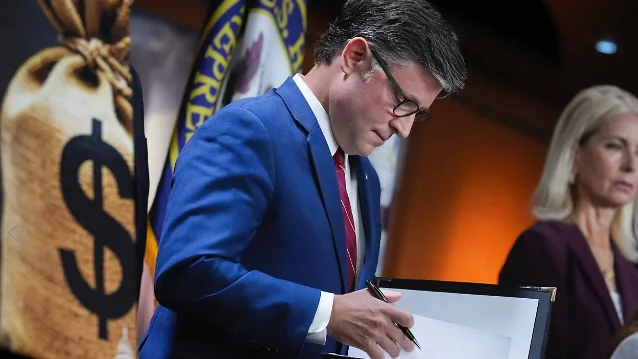
On June 3, 2026, the House of Representatives passed a war powers resolution 215–208, voting to halt ongoing U.S. military action against Iran. 1 This is only the fourth time the House tried this move — and the first time it actually succeeded. A small group of Republicans broke with their party to side with Democrats.
Some background you need
Back in late February 2026, President Trump launched a joint military campaign against Iran alongside Israel — a conflict now roughly three months old. A ceasefire was declared in April, but sporadic strikes have continued, and peace talks are stuck partly because Israel's war with Hezbollah in Lebanon keeps complicating things. The Strait of Hormuz, a critical chokepoint for oil shipping, is still a sticking point.
What does this vote actually do?
Here's the honest answer: less than you might think, at least immediately. The resolution passed the House, but it still needs to clear the Senate, and the Senate hasn't held a final vote on its own version yet. Even if the Senate passes it, Trump can veto it, and Congress would need a two-thirds majority to override that.
Secretary of State Marco Rubio warned that if Congress forces Trump's hand, Iran will see it as weakness and have less reason to negotiate a deal. Speaker Mike Johnson framed Trump as "laser focused" on other priorities ahead of the midterms — which reads as political spin, but also signals the administration isn't terribly worried about losing this vote.
Why it matters and what to watch
The significance here isn't necessarily legal — it's political. More Republicans are getting uncomfortable with an ongoing war that has no clear endpoint. Each successive vote has gotten closer to passing, which tells you momentum is building. Watch whether the Senate follows through with its own final vote in the coming weeks. If both chambers pass it, Trump's veto decision becomes a defining political moment ahead of the November midterms.
Story 2: Armenia votes this Saturday — and it's basically a referendum on Russia vs. Europe
What happened
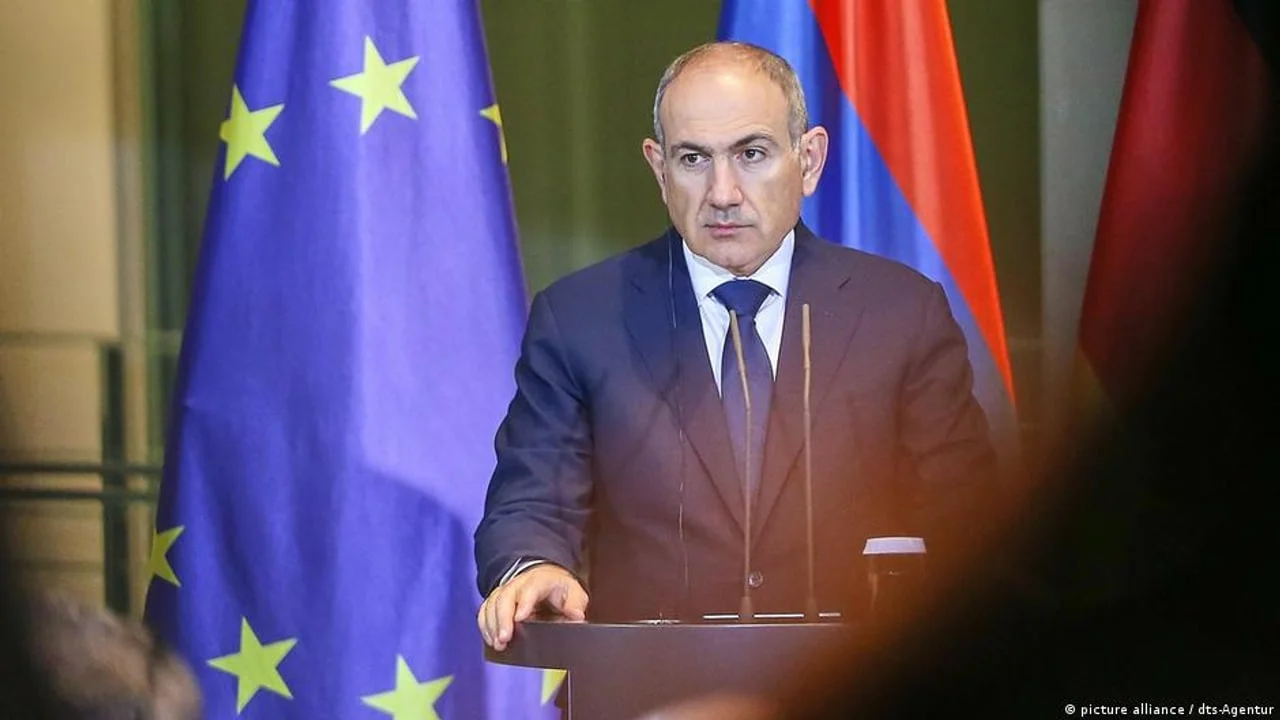
Armenia holds parliamentary elections on June 7, 2026, and the outcome will shape whether this small South Caucasus country continues its pivot toward the European Union or slides back toward Russia. 2
Prime Minister Nikol Pashinyan's ruling party, Civil Contract, leads polls with around 26–34% support — well ahead of the pro-Russian opposition parties, which together don't break double digits.
The backstory in plain terms
Armenia used to be squarely in Russia's orbit — it was a member of the Collective Security Treaty Organization (CSTO), Russia's answer to NATO. That changed in 2022, when Azerbaijan attacked Armenian border villages and Russia, which was supposed to come to Armenia's defense, didn't show up. Pashinyan took that as a betrayal, and he's been steering toward Europe ever since. In May 2025, Armenia's parliament formally launched the EU membership process.
Where Russia comes in
Moscow hasn't taken this quietly. Russia has threatened tariffs, cut preferential gas deals, and restricted Armenian agricultural imports. President Putin suggested Armenia hold a referendum on whether to stay in Russia's economic club or join Europe — framed as a "choice," but widely seen as a threat. An independent Russian investigation reportedly found that a pro-Russian opposition leader has ties to Russia's FSB intelligence service; Armenian authorities have opened treason cases against several opposition figures. The opposition calls this political persecution.
U.S. Secretary of State Rubio told the Senate that Russia is actively hoping Pashinyan loses this election. 3
What to watch
The biggest variable is the 50% of poll respondents who declined to say who they'd vote for. If Civil Contract holds its lead, Armenia's westward drift becomes harder to reverse — EU accession processes are slow but sticky. If the opposition surprises, expect Pashinyan to face immediate pressure to step back from EU talks and renegotiate with Moscow.

Story 3: North Korea showed off a new nuclear factory and said it wants to grow much, much bigger
コンテンツカードを読み込んでいます…
What happened
North Korean state media reported Thursday that Kim Jong Un personally visited a newly launched nuclear material production facility and pledged to "exponentially" strengthen his country's nuclear arsenal. 4 Kim said North Korea's "weapons-grade nuclear material production capacity more than doubled" over the past five years. South Korea's defense ministry assessed the new facility as a uranium enrichment site — potentially a fourth such location, in addition to known sites at Yongbyon, Kangson, and Kusong.
State media released photos showing rows of cylindrical centrifuges inside the facility — the machines used to enrich uranium into weapons-grade material.
Why this is a bigger deal than it looks
North Korea declares nuclear intent regularly enough that it can feel routine. But this announcement is notable for a few specific reasons. First, the timing: it follows a February party congress where Pyongyang reaffirmed "irreversible" nuclear-armed status and announced a five-year military modernization plan. This site visit appears to be Kim reporting progress on that plan. Second, the scale: if this is a fourth enrichment site, North Korea's capacity is larger than most outsiders had calculated. South Korea's Unification Ministry estimated the country already holds up to 2,000 kg of highly enriched uranium — at roughly 10–12 kg per bomb, that's somewhere between 160 and 200 potential warheads' worth of material.
What to watch
Kim's "action guidelines for rapidly accelerating the qualitative and quantitative buildup" suggest North Korea is not just maintaining its arsenal — it's in active expansion mode. This complicates any diplomatic engagement, since a larger and more dispersed nuclear program is harder to negotiate away. Watch whether South Korea, Japan, or the U.S. responds with new military exercises or sanctions pressure in the coming days. The Yonhap news agency is the best source for developments from Seoul. 5
Story 4: Myanmar's military just gave itself a civilian title — but nothing actually changed
What happened
Myanmar's coup leader Min Aung Hlaing, who seized power in a February 2021 military takeover, officially became the country's president on April 11, 2026 — following stage-managed elections held between December 2025 and January 2026. 6
The elections were not competitive. The main democratic opposition party, the National League for Democracy (which won the 2020 election that the military annulled), was dissolved and excluded. Most major opposition parties refused to participate or were barred. Voting was only conducted in areas under military control. The military-backed party won 339 out of 420 contested seats — and under Myanmar's existing constitution, the military gets an automatic 25% of all parliamentary seats anyway. Total military-aligned control: over 86% of parliament.
Why this matters
The optics are the point. By putting on civilian clothes, Min Aung Hlaing gets diplomatic cover — it's now slightly easier for countries to justify engaging with a "president" than with the general who staged a coup. Crisis Group, which researches armed conflicts, notes this is the strategy: not a genuine transition, but a legitimacy upgrade for international consumption. 6
Min Aung Hlaing faces international arrest warrants from the International Criminal Court for alleged crimes against humanity connected to the 2017 Rohingya persecution, and the International Court of Justice is due to issue a ruling on genocide charges within months.
The civil war inside Myanmar continues. And the country has become a hub for transnational crime — scam compounds, drug production, human trafficking, and illicit money flows — that increasingly affect neighboring countries.
What to watch
China, which helped broker a fragile ceasefire between the military and some armed groups, is the key outside player here. The new "president" visited India in late May as his first foreign trip, suggesting a desire to broaden diplomatic relationships beyond Beijing. For everyone else, the question is how to engage without lending legitimacy to a government that seized power by force — and that question won't get easier anytime soon.
Stories selected from verified news sources for June 4, 2026. This digest covers the past 24 hours of global political developments.
参考ソース
- 1House passes war powers resolution — Spectrum News
- 2Armenia's election offers a choice between Russia and EU — DW
- 3Rubio: Russia wants Pashinyan to lose election — CivilNet
- 4North Korea's Kim inspects new nuclear facility — Ommcom News
- 5Yonhap report on Kim's nuclear facility inspection
- 6Myanmar's New Administration: Military Consolidation, Not Transition — International Crisis Group
このコンテンツについて、さらに観点や背景を補足しましょう。